Ever wondered what the dry mode on an air conditioner is and how it works? An AC is one of the most widely used electrical appliances in homes, offices, different institutions, factories, etc. Its primary function is to make the environment cool and comfortable.
AC has many functions or modes, including dry mode. Now the question is, if this appliance helps to make the environment cool, then what’s the function of the dry or dehumidification mode? Well, let's get into the functions of dry mode and why and when we need it.
What is AC Dry Mode?
Before understanding the dry mode on AC, you should know about the humidity in the air. Humidity is a type of weather condition where the air contains a high amount of water vapor (moisture), which causes the air to become warm, sticky, and dense.
This kind of weather or environment can feel heavy and suffocating. It can cause many health issues like heat exhaustion, breathing difficulties, and even heatstroke. In order to avoid a humid environment, AC Dry Mode comes in clutch.
Let’s understand the AC Dry Mode:
The dry mode function is designed in a way that reduces the humidity without making the temperature way too low. Without aggressively lowering the room temperature, it reduces the excess moisture from the air, making the air much healthier. This special feature is highly useful in humid regions like Louisiana, Mississippi, Florida, Michigan, etc.
If you’re shopping for a new air conditioner, look for models with an effective dry mode feature. Check out these ACs with dry mode available on Amazon.
How does the Dry Mode function?
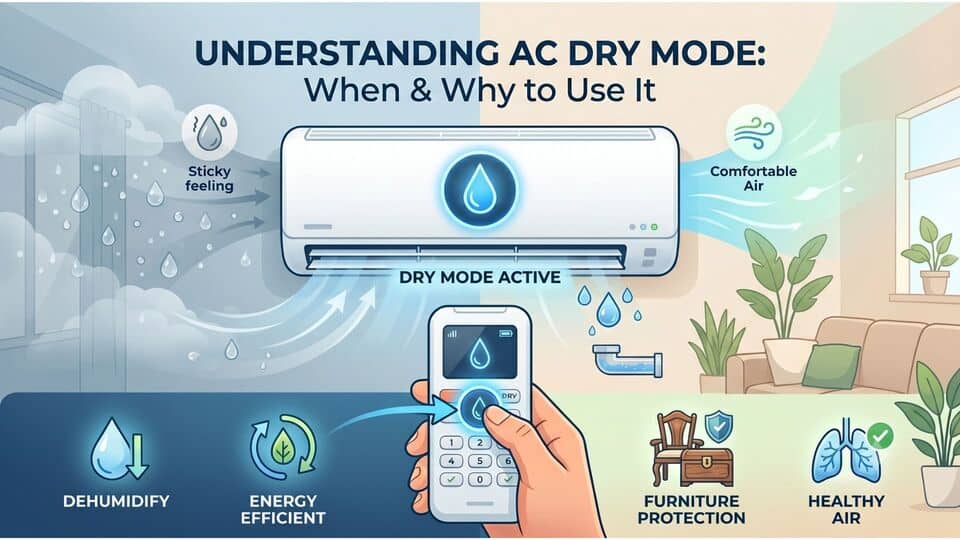
When the dry mode activates, AC’s compressor and fan start running at a speed that is lower than usual. It takes the warm, humid air and passes it through the chilled coils, which condense the moisture out of the air, making the air less humid.
The water droplets taken from the moisture are then drained away. This process dehumidifies the air, making the air feel less sticky and more comfortable. This is how you get an air that is cooler and healthier to breathe in without making the temperature significantly lower. This built-in mild dehumidifier in your AC unit is what is known as Dry Mode.
How to Use the Dry Mode?
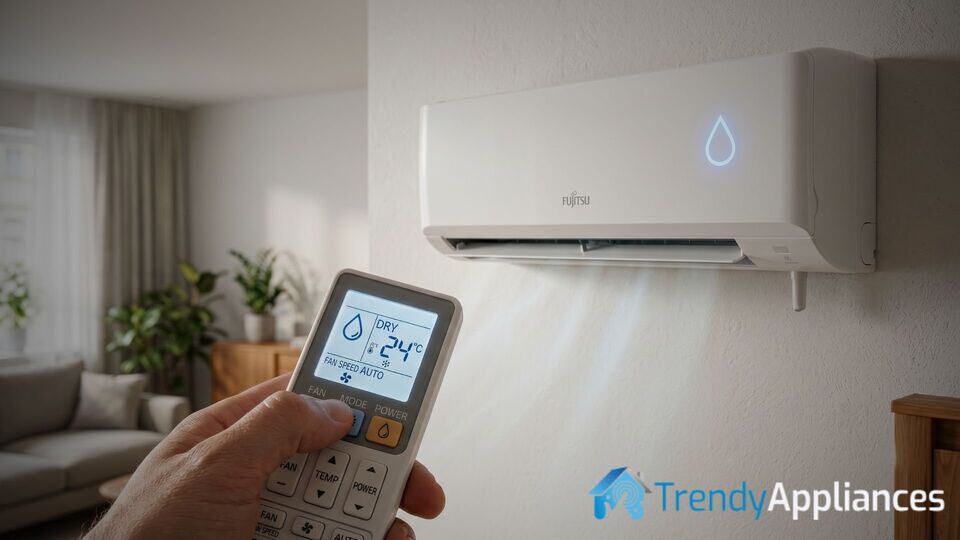
Most modern air conditioners have a dedicated button in the remote labeled as “Dry” or sometimes the Dry Mode can be indicated with a “Water Droplet (💧)” sign in the remote. To use it:
Turn on the AC first using your remote or the control panel.
Press the “Dry” button of the remote or press where you can see the “Water Droplet ( 💧) sign. Or navigate through the control panel to find it.
Adjust the fan speed at your convenience (if available).
Please note that, usually in Dry Mode, the temperature control (setting specific temperature) option is not available, as the main function of Dry Mode is to dehumidify the air rather than bring the temperature down.
When to use AC’s Dry Mode?
Dry Mode is best suited for:
When the humidity in the air is high, especially during rainy or monsoon seasons. Even though the temperature feels moderate but humidity level is considerably high in these seasons.
When the air feels sticky and dense but not hot. This can be felt usually in early mornings or late evenings.
If the room has poor ventilation, the air can not pass easily through the room.
In coastal areas where the air’s dampness is an issue.
For instance, if you feel like your room’s furniture or beddings are never fully dry, or your skin feels sticky even after taking a shower, it means the humidity in the room is high. In that case, turn the AC’s dry mode on and enjoy a comfortable indoor environment.
How is Dry Mode Beneficial?
Saving money and electricity:
It is energy efficient. Dry mode usually consumes less electricity as when you turn on the dry mode, the AC’s compressor and fan run at a lower speed, saving both your electricity and bill.
Health Benefits:
Dry mode helps lower the humidity in the air, which keeps you away from many heat-related health issues, such as heat exhaustion, oppressive air intake, heatstroke, and many more. Dry mode makes the air healthier to be in.
Saving your belongings:
Usually, in high humidity, when the air becomes stickier and damper, it creates a musty odor and increases the risk of mold growth in wooden furniture. So, dry mode is basically helping in increasing your furniture's lifespan.
Increasing AC’s lifespan:
Since the dry mode functions less intensively, this can contribute to less wear and tear, prolonging AC’s durability.
Since air conditioners have become an integral part of our day-to-day life, it is important to use them in a way that will benefit us. AC’s dry mode is not just another function. It has many positive factors, including energy efficiency, healthier air, a comfortable indoor environment, and, most importantly, it contributes to a healthier lifestyle.