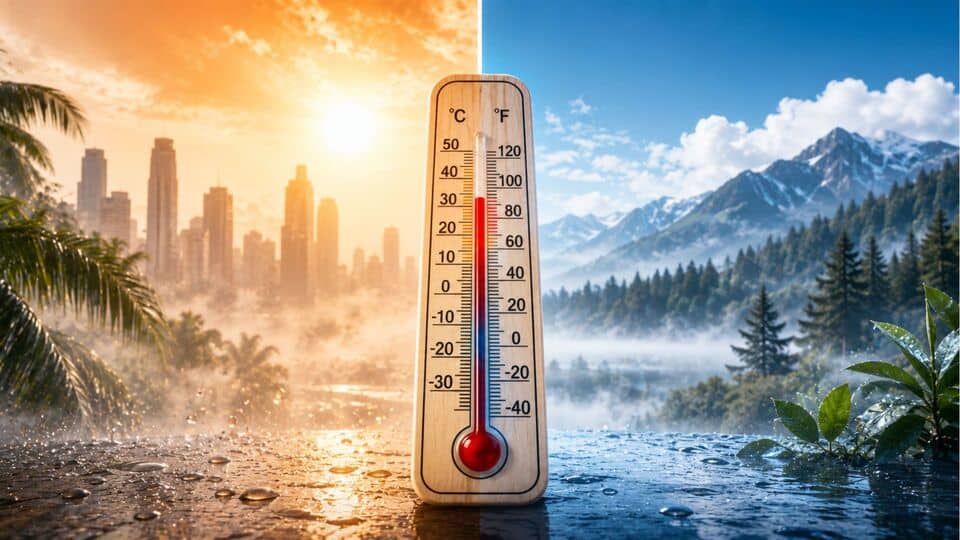
You may have heard a weathercaster often mention that a place's high humidity is making people feel warmer than usual. It may have made you curious about the reason behind this and how humidity can affect temperature. Humidity has an undeniable relationship with temperature, and it directly affects how warm or cool we feel.
If you want to know the detailed relationship between humidity and temperature and their effects on each other, read the rest of this article.
What is Humidity?
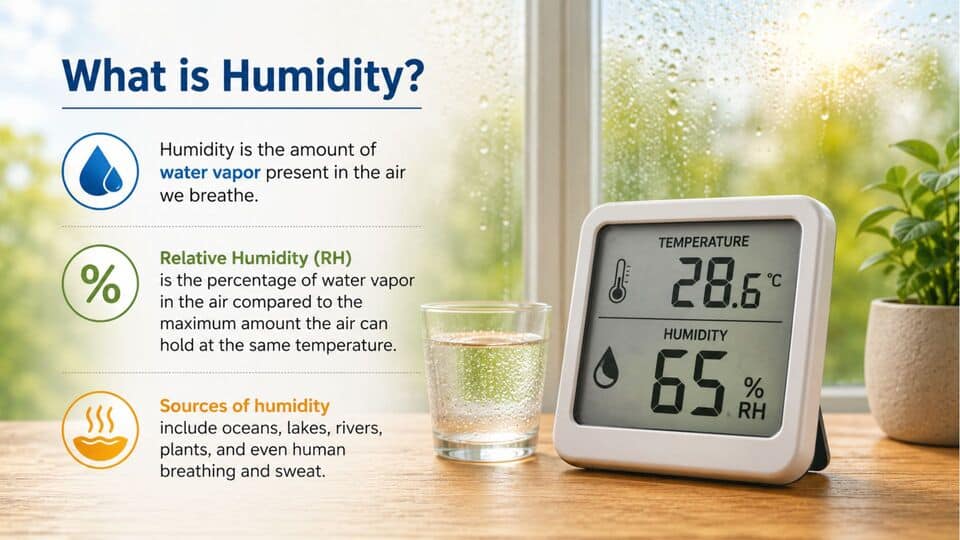
Humidity represents the amount of water vapor present in the air that you breathe. Water vapor is the gaseous form of water present in the air, and it comes from our bodies as well as other water sources.
What is Relative Humidity?
Relative humidity is the percentage or measurement of the amount of water vapor present in the air compared to the maximum amount the air can hold at the same temperature. In other words, it is the percentage of water vapor currently present compared to the amount needed for the air to become saturated.
What Causes Humidity?
The presence of water vapor in the air or atmosphere causes humidity. We all know that about two-thirds of the Earth is covered with water, and water evaporates from every type of water source. The human body is also made up of about 70% water, so naturally, our bodies also release water into the air in the form of water vapor.
In summer, more water evaporates than usual because of direct sunlight on water sources. This is the reason for high humidity or the excessive amount of moisture in the air. This extra moisture can make us sweat more than usual, making us feel uncomfortable.
How does humidity affect the temperature of a place?
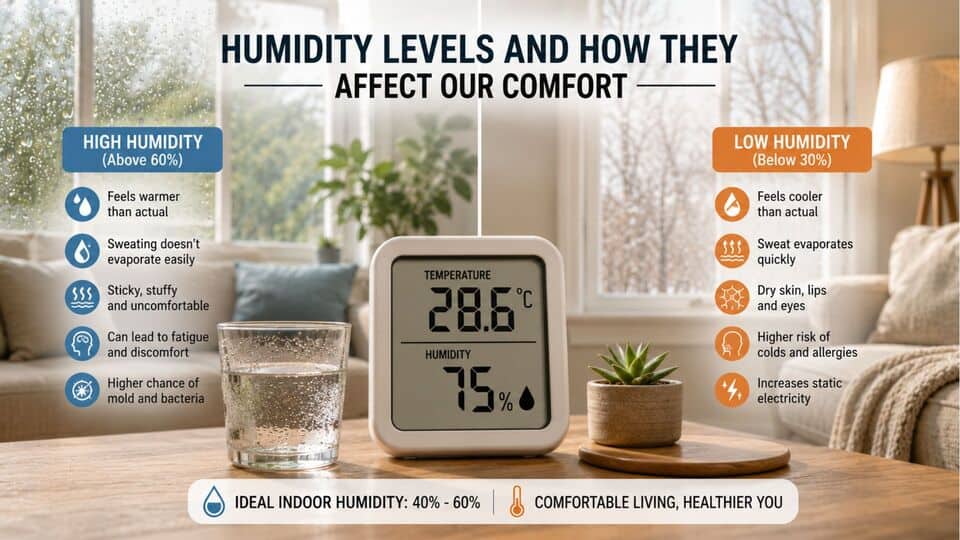
Humidity is closely related to temperature because the heat we feel on our skin depends on the surrounding air, and humidity represents the amount of moisture in that air.
If the amount of moisture in the air is high, our body cannot evaporate its sweat into the surrounding air quickly. This slower evaporation of our body's moisture makes us feel hotter by increasing our perceived temperature.
On the contrary, our body's moisture evaporates faster in low humidity because there is less moisture in the air. As a result, sweat evaporates more quickly until the air reaches its moisture-holding capacity.
How Does Humidity Make Us Feel?
High humidity means there is more moisture in the air, while low humidity means there is less moisture than usual. Both can affect our comfort.
High Humidity
Now, what happens if the humidity is too high? In summer, high humidity makes us uncomfortable because it traps more heat in the air and slows down the evaporation of sweat from our bodies. However, in winter, high humidity can feel more comfortable because moist air holds more heat than the dry air that is common during winter.
High humidity also adds moisture to winter's dry air, helping prevent our skin from drying out. However, excessively high humidity can make you feel less energetic. It can also cause hyperthermia, or overheating, because it slows the evaporation of sweat from the body.
Low Humidity
In winter, low humidity or low moisture makes the air drier than usual, which is not good for our skin. Dry air is favorable for the growth of bacteria, viruses, and other harmful organic substances. As a result, low humidity increases the risk of these microorganisms spreading during winter. However, in summer, low humidity provides relief because it helps the body evaporate sweat more quickly.
Signs of Too Much Moisture in the House
Excessive moisture may be present in your house if you feel warmer and more uncomfortable than usual. The following signs indicate that there is too much moisture in your home, and you should reduce the indoor humidity as soon as possible:
- Mold growing on walls and furniture surfaces
- Cracking or blistering paint on walls and furniture
- Condensation on windows during winter
- Excessive dust mites
How to Lower Humidity in a House Fast?
Since high humidity can sometimes cause discomfort, you may want to reduce the humidity inside your house, especially during summer. This can help you sweat less and feel more comfortable in hot weather. Here are some effective ways to lower indoor humidity quickly:
- Use a dehumidifier, as it removes moisture from the air. For smaller rooms, you may also check these best bedroom dehumidifiers.
- Use a ventilation fan to increase airflow and reduce humidity.
- Turn on your AC. It lowers the room temperature while also removing excess moisture from the air. If you need a flexible cooling option, you can explore the best portable air conditioners.
- Find and repair leaking pipes, as they increase indoor moisture.
- Use a clothesline outdoors instead of drying laundry indoors, as drying clothes releases water vapor into the air.
- Use rock salt, as it naturally absorbs moisture.
- Cover your pots while cooking to reduce the amount of steam released.
- Keep windows open for better air circulation whenever possible.
If you are confused between cooling appliances, this guide on air cooler vs air conditioner can help you understand the key differences. You can also read whether you should buy an air cooler before choosing one for your home.
FAQ
- Can high humidity make you sick?
High humidity increases the risk of respiratory infections because bacteria and viruses are more likely to grow in damp environments. It also makes the atmosphere damp and humid. In addition, both bacteria and viruses tend to grow more easily when the relative humidity (RH) is around 60%.
2. Is too much humidity hurting your health?
Anything in excess can be harmful, and too much humidity is no exception. It can lead to mold growth, poor indoor airflow, and wood rot caused by damp air. Poor indoor airflow can be especially harmful to children and older adults, as it may increase their risk of pneumonia.
3. How does humidity affect cold temperature?
The relationship between humidity and temperature is undeniable, whether the weather is hot or cold. High humidity during cold weather can make the winter air feel even colder. Excess moisture saturates our clothing, leaving more water on our skin and making us feel colder. As a result, high humidity can increase the chilliness of winter more than low humidity.
4. Does humidity affect the real feel?
Humidity plays a key role in determining the real feel of the weather. Besides humidity, the sun's position and the time of day also influence how warm or cool we feel.
The sun shines at a lower angle in the morning, making us feel less warm than at midday, when the sun is nearly overhead and its rays are more direct. Changes in the sun's angle also influence humidity levels. Higher temperatures increase humidity, making us feel more uncomfortable because our bodies cannot evaporate sweat as easily in humid conditions.
I hope this article has answered your question about how humidity affects temperature. In short, humidity influences temperature by increasing or decreasing the amount of heat we feel in the atmosphere.